Posts

Paper Summary: High-availability distributed logging with BookKeeper
Image
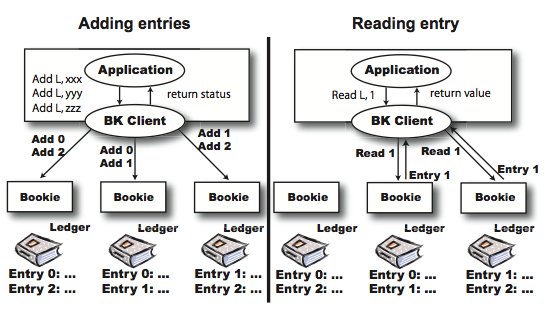
This paper is brought to you by the Yahoo Research group that developed the ZooKeeper, and it appeared in LADIS'12 . BookKeeper targets the logging problem. More specifically, the distributed logging problem where high-availability is important and where many distributed clients are interested in reading the logs. Most current applications log to the local disk, but this constitutes a single point of failure (SPOF) and betrays high-availability. A hasty remedy is to write to an NFS partition to store log files remotely. But now the NFS server becomes the SPOF. (We can of course replicate the NSF server, but the performance would suffer.) Another solution is to use NetApp filers that implement RAID. This costs money, and still does not completely solve SPOF. BookKeeper provides a no-SPOF efficient data store  for serving a large number of concurrent single-writer, multiple-reader logs. It stripes log entries across servers, leading to higher throughput. BookKeeper is opensour...

Paper summary: Tango: Distributed Data Structures over a Shared Log

Image
This paper is from the Microsoft Research Silicon Valley (which unfortunately recently got closed), and it appeared in SOSP'13. SOSP'13 provides open access, so here is the pdf for free.  The talk video is also on YouTube as part of this SOSP'13 talks playlist . I think this paper didn't get the attention it deserves. It is really a great piece of work. To facilitate construction of highly available metadata services, Tango provides developers with the abstraction of a replicated in-memory data structure (such as a map or a tree) backed by a shared log. While ZooKeeper provides developers a fixed data structure ( the data tree) for building coordination primitives , Tango enables clients to build different data structures based on the same single shared log . Tango also provides transactions across data structures. The state of a Tango object exists in two forms. 1) a history: which is an ordered sequence of updates stored durably in the shared log, 2) any number...

Revisiting the EWDs

Image
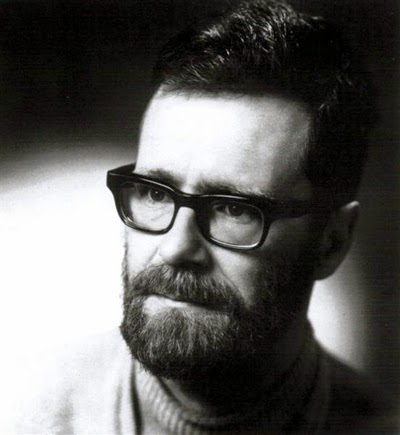
Dijkstra was the original hipster. He was blogging before blogging was cool. "For over four decades, he mailed copies of his consecutively numbered technical notes, trip reports, insightful observations, and pungent commentaries, known collectively as EWDs, to several dozen recipients in academia and industry. Thanks to the ubiquity of the photocopier and the wide interest in Dijkstra’s writings, the informal circulation of many of the EWDs eventually reached into the thousands." And, thanks to the efforts of the University of Texas at Austin CS Department, all of these EWDs have been accessible to the public conveniently. I remember when I first discovered the EWDs as a fresh graduate student. I was mesmerized. I read them with a lot of joy. It was as if a new world had opened to me to discover. He had many insightful observations. I recommend all CSE graduate students to read the EWDs to grow their minds. Now, I don't agree with Dijkstra on everything. He was ...

Paper summary: Can a decentralized metadata service layer benefit parallel filesystems?

Image
Parallel filesystems do a good job of providing parallel and scalable access to the data transfer, but, due to consistency concerns, the metadata accesses are still directed to one metadata server (MDS) which becomes a bottleneck. This is a problem for scalability because studies show that over 75% of all filesystem calls require access to file metadata. This paper proposes to adopt ZooKeeper as a decentralized MDS for parallel filesystems and test whether that improves performance. You can ask, what is decentralized about ZooKeeper, and you would be right about the update requests. But for read requests, ZooKeeper helps by allowing any ZooKeeper server to respond while guaranteeing consistency. (You would still need to do a sync operation if the request needs the read to be freshest and satisfy precedence order.) If you recall, ZooKeeper uses a filesystem API to enable clients to build higher-level coordination primitives (group membership, locking, barrier sync). This paper is...

Distributed system seminar talk: Data grouping framework for energy-efficiency in distributed storage systems

My research group and Tevfik's research group meet jointly for a weekly distributed systems. This gives our students a chance to give talks about current project and get feedback for improvement in a friendly setting. In this week's seminar, Luigi presented his research on building energy-efficient file systems. I was initially skeptical about energy-efficiency as a research topic. Academicians like to work on things that they can quantify and improve, so I was thinking that energy-efficiency in distributed storage was an opportunistic research problem, rather than a real-world problem. Turns out, I couldn't be any more wrong: IT companies spend $10 billions every year on energy consumption (This is 3% of entire expenditure of US!). $3.5 billion of that $10 billion is energy expenditure is due to the storage systems. Dynamic power management (DPM) is the primary mechanism for energy saving at the storage systems. DPM basically means turn the disk off if you're not ...

Paper summary: ZooKeeper: Wait-free coordination for Internet-scale systems

Image
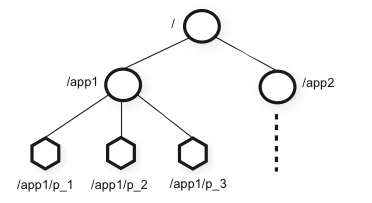
Zookeeper is an Apache project for providing coordination services to distributed systems. ZooKeeper aims to provide a simple kernel (a filesystem API!) for empowering the clients to build more complex coordination primitives. In this post I will provide a summary of the ZooKeeper paper , and talk about some future directions I can see this going. "Client" denotes a user of the ZooKeeper service, "server" denotes a process providing the ZooKeeper service, and "znode" denotes an in-memory data node (similar to the filesystem inode) in the ZooKeeper. znodes are organized in a hierarchical namespace referred to as the data tree. There are 2 types of znodes. "Regular": Clients manipulate regular znodes by creating and deleting them explicitly. "Ephemeral": Clients create ephemeral znodes, and they either delete them explicitly, or let the system delete them automatically when the client's session termination. Additionally, when cr...

Sudoku and research

I got addicted to Sudoku... again. When I have a chance to rest, I enjoy the challenge of solving Sudoku puzzles (*cough* at the expert level) on my iPhone. I think this practice gives my mind sharpness and clarity (my wife would roll her eyes so hard if she heard me say this :-). I was recently thinking of how the process of solving a Sudoku puzzle resembles doing research. 1) Sequencing is important. In Sudoku, you take things step by step. You fill out the obvious cells first. Having filled these, you now have more constraints/clues upon which you can fill in other blocks. You have to solve Sudoku step by step from most obvious to what is made obvious having finished that step. This is also the case in research. You can't rush things; you should start with the simple steps. First you have to attack/complete what you can do currently, so that more things can become available for you to see. You have to climb the stair step by step to see more and do more. 2) Writing is i...

Using TLA+ for teaching distributed systems

I am teaching CSE 4/586 Distributed Systems class  again this Fall (Fall 2014). This is the course I have most fun teaching. (I would like to think my students also feel that way :-) I teach the course with emphasis on reasoning about the correctness of distributed algorithms. Here are the topics I cover in sequence: Introduction, Syntax and semantics for distributed programs, predicate calculus Safety and progress properties Proof of program properties Time: logical clocks, State: distributed snapshots Mutual exclusion, Dining philosophers Consensus, Paxos Fault-tolerance, replication, rollback recovery, self-stabilization Programming support for distributed systems Data center computing and cloud computing  CAP theorem and NOSQL systems Distributed/WAN storage systems I put emphasis on reasoning about distributed algorithms because concurrency is very tricky; it truly humbles human brain. More than 3 actions in a distributed program and your intuitions will f...

Hybrid Logical Clocks

Image
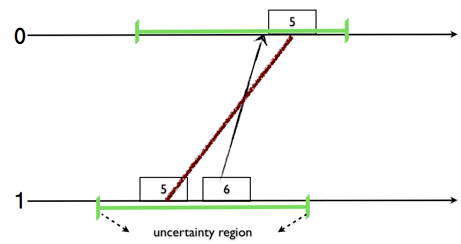
Here I will write about our recent work on Hybrid Logical Clocks, which provides a feasible alternative to Google's TrueTime. A brief history of time (in distributed systems) Logical Clocks (LC) was proposed in 1978 by Lamport for ordering events in an asynchronous distributed system. LC has several drawbacks for modern systems. Firstly, LC is divorced from physical time (PT), as a result we cannot query events in relation to real-time. Secondly, to capture happened-before relations, LC assumes that there are no backchannels and all communication occurs within the system. Physical Time (PT) leverages on physical clocks at nodes that are synchronized using the Network Time Protocol (NTP). PT also has several drawbacks. Firstly, in a geographically distributed system obtaining precise clock synchronization is very hard; there will unavoidably be uncertainty intervals. Secondly,   PT has several kinks such as leap seconds and non-monotonic updates.  And, when the uncertaint...

Distributed is not necessarily more scalable than centralized

Centralized is not necessarily unscalable!  Many people automatically associate centralized with unscalable, and distributed with scalable. And, this is getting ridiculous. In the Spring semester, in my seminar class, a PhD student was pitching me a project for distributed storage: syncing from phone to work/home computers and other phones. The pitch started with the sentence "Dropbox is unscalable, because it is centralized". I was flabbergasted, and I asked a couple of times "Really? Do you actually claim that Dropbox is unscalable?". The student persisted and kept repeating that "Dropbox has a bottleneck because it is a centralized storage solution, and the distributed solution doesn't have that bottleneck". I couldn't believe my ears. Dropbox already proved it is scalable: It serves files for more than 200 million users, who store 1 billion files every 24 hours. That it has a centralized architecture hosted in the cloud doesn't make i...

Popular posts from this blog

Hints for Distributed Systems Design

The Agentic Self: Parallels Between AI and Self-Improvement

Learning about distributed systems: where to start?

5 Lessons at 50

Foundational distributed systems papers

Building a Database on S3

Cloudspecs: Cloud Hardware Evolution Through the Looking Glass

Aurora DSQL: Scalable, Multi-Region OLTP

TLA+ modeling tips

Supporting our AI overlords: Redesigning data systems to be Agent-first